
.png?width=600&height=408&name=march%202023%20-%20french%20toast%20(1).png)
.png?width=1080&height=1080&name=Bold%20Metrics%E2%80%99%20digital%20twin%20technology%20helps%20some%20of%20the%20worlds%20biggest%20bands%20increase%20conversion%20and%20AOV%2c%20reduce%20returns%2c%20optimize%20their%20customer%20experience%2c%20and%20boost%20brand%20loyalty.%20(2).png)

As apparel brands enter 2026, the e-commerce strategy is no longer about experimentation. It's about execution.
Rising acquisition costs, ongoing return pressure, global expansion, and increasingly selective consumers have made one thing clear. Brands need smarter foundations, not louder tactics.
Across the industry, one challenge continues to surface as both a risk and an opportunity: fit and sizing remain the most influential drivers of conversion, returns, and loyalty in apparel ecommerce.
McKinsey's State of Fashion 2026 report projects that the global fashion industry will once again post low single-digit growth this year. Forty-six percent of executives expect conditions to worsen, up 8 percentage points from 2025. In this environment, brands that treat fit as a strategic capability rather than a surface-level feature will be best positioned to grow in a rapidly changing market.
Why 2026 Is a Pivotal Year for Apparel E-commerce
The e-commerce landscape entering 2026 is defined by constraint and expectation.
Shoppers expect personalization, accuracy, and consistency across every channel. Internally, teams are under pressure to reduce waste, protect margins, and scale efficiently. At the same time, brands are expanding into new regions, categories, and customer segments, each with unique sizing challenges.
What once felt manageable through size charts and historical averages is no longer enough.
The e-commerce apparel market is projected to reach $808.62 billion in 2026, growing at an annual rate of 8.8%. Yet consumer confidence remains challenged, with 76% of fashion executives citing tariffs as the biggest issue defining 2026. In this landscape of constrained growth and cautious spending, every conversion matters.
Apparel ecommerce success in 2026 depends on answering three critical questions:
- How do we reduce returns without sacrificing conversion?
- How do we build loyalty without relying on discounts?
- How do we scale while maintaining sizing consistency and customer trust?
Fit sits at the center of all three.
The Role of Fit in Modern E-commerce Conversion
Fit uncertainty remains one of the biggest friction points in the online apparel journey. When shoppers hesitate, it's rarely because of price or product quality. It's because they're unsure whether something will work for their body.
This hesitation amplifies on mobile (which accounts for 81% of fashion ecommerce traffic), across international markets, and within categories where sizing inconsistency is common.
When fit confidence is missing, the consequences ripple through the entire customer journey. Cart abandonment increases. Bracketing is becoming more common among Gen Z shoppers (51% of Gen Z shoppers), who intentionally purchase multiple sizes with plans to return most. Return rates rise. Trust erodes over time.
According to recent industry data, size and fit issues account for 67% of fashion returns. That translates to billions in lost revenue and operational costs. More importantly, it represents millions of frustrated customers who associate uncertainty with your brand.
In contrast, when shoppers feel confident about fit, conversion rates naturally improve. They buy faster, keep more items, and return with less hesitation.
This is why leading apparel brands are investing in fit and sizing solutions that move beyond static size charts and toward personalized recommendations.
From Size Charts to Fit Intelligence
.Traditional sizing systems were not built for ecommerce at scale. They assume uniform bodies, consistent grading, and predictable shopper behavior. None of these reflect reality.
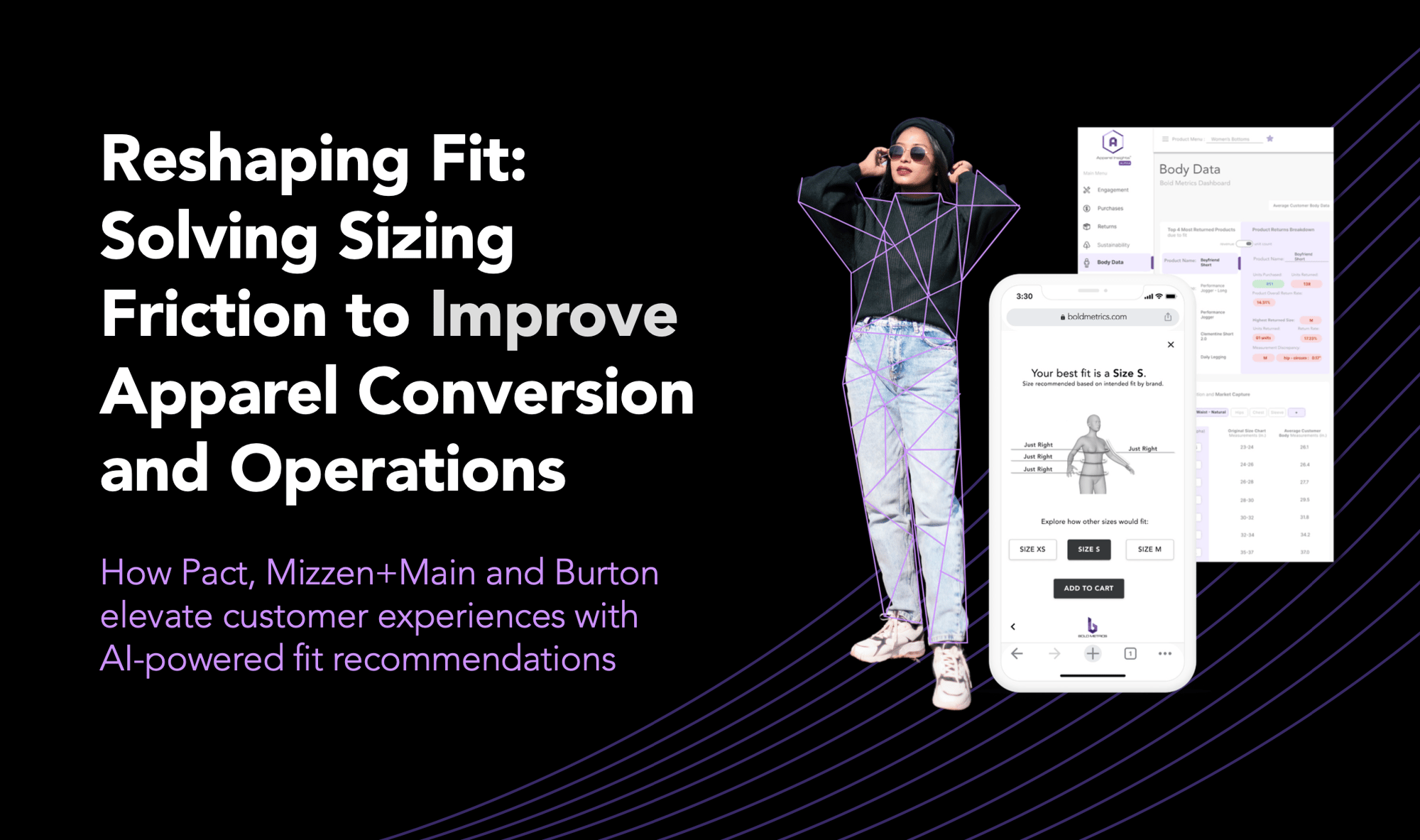
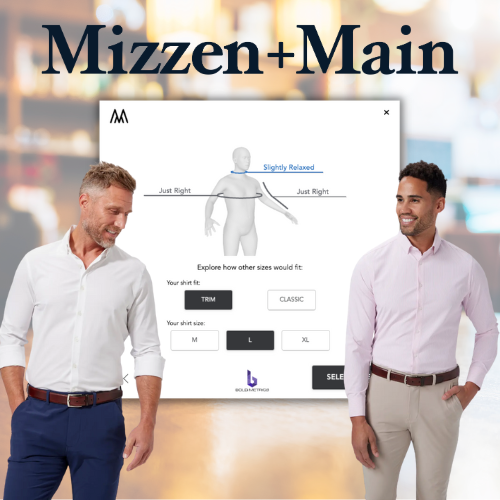
By using real body data and AI driven modeling, brands can provide shoppers with personalized size recommendations based on how garments actually fit real people. This removes guesswork from the purchase decision and replaces it with clarity.
For brands, this shift unlocks value well beyond the point of sale. Fit intelligence enables more consistent sizing across collections, better alignment between design, merchandising, and ecommerce, reduced fit related returns, improved product development decisions, and stronger customer trust over time.
The technology has matured. AI driven approaches now deliver highly accurate size predictions with minimal customer input. The question is no longer whether the technology works, but whether brands will deploy it strategically.
In 2026, fit data has become core ecommerce infrastructure.
Fit, Returns, and Customer Loyalty
Returns are often framed as a logistics or policy problem, but they begin much earlier in the customer journey.
Poor fit remains the leading cause of apparel returns, accounting for 53% of returns. Online apparel return rates range from 20% to 30%, with some segments reaching 50%. Every return represents not just lost margin, but a missed opportunity to build confidence.
Shoppers remember fit failures. Each one increases perceived risk and reduces the likelihood of future purchases.
Brands that improve fit accuracy see measurable downstream impact. Higher repeat purchase rates. Increased average order value. Greater willingness to buy at full price. Stronger long-term loyalty.
In 2026, loyalty is built through consistency. Delivering the right fit repeatedly is one of the most effective ways to earn it.
Scaling E-commerce in 2026: Why Fit Comes First
As brands expand into new markets and categories, sizing complexity increases. Regional differences, body diversity, and category-specific fit expectations make a one-size-fits-all chart approach untenable.
Without a unified fit strategy, brands face inconsistent customer experiences, increased returns in new markets, internal misalignment across teams, and slower product iteration cycles.
Executives cite artificial intelligence as the industry's biggest opportunity in 2026, surpassing other business priorities such as product differentiation and strengthening sustainability. With turbulent conditions including volatile input costs and supply chain disruptions, AI is shifting from a competitive edge to a business necessity.
Fit intelligence provides a scalable foundation. It creates a shared source of truth across ecommerce, product, and operations, allowing brands to grow without sacrificing experience.
How Bold Metrics Supports Apparel Brands in 2026
Bold Metrics helps apparel brands turn fit and sizing into a competitive advantage.
Using AI-driven body data, Bold Metrics enables brands to deliver personalized size recommendations that improve conversion, reduce returns, and create more consistent sizing across collections.
With Bold Metrics' AI-driven Smart Size Chart, Helly Hansen is revolutionizing how customers find their best fit worldwide:
| Region | Conversion Lift | AOV Increase | Purchases Using SSC |
|---|---|---|---|
| North America | +1.8x | +$50.47 | 18.3% |
| Europe | +3.8x | +$65.36 | 19.3% |
Beyond the shopper experience, Bold Metrics provides insights that inform design, grading, and merchandising decisions, helping brands build better products from the start.
In a year where efficiency, trust, and personalization define success, fit becomes a lever brands cannot afford to ignore.
Starting 2026 with Confidence
The apparel brands that will succeed in 2026 are not chasing short-term wins. They are investing in systems that reduce friction, improve clarity, and scale with their business.
Fashion executives continue to emphasize the need for a distinctive value proposition rooted in creativity and innovation. In an environment of unpredictable consumer behavior, differentiation through better fit experiences offers a clear path forward.
Fit and sizing sit at the intersection of customer confidence and operational performance. When done right, they elevate every part of the ecommerce journey.
As the industry continues to evolve, one truth remains constant: when fit works, e-commerce works.