
.png?width=600&height=408&name=march%202023%20-%20french%20toast%20(1).png)
.png?width=1080&height=1080&name=Bold%20Metrics%E2%80%99%20digital%20twin%20technology%20helps%20some%20of%20the%20worlds%20biggest%20bands%20increase%20conversion%20and%20AOV%2c%20reduce%20returns%2c%20optimize%20their%20customer%20experience%2c%20and%20boost%20brand%20loyalty.%20(2).png)

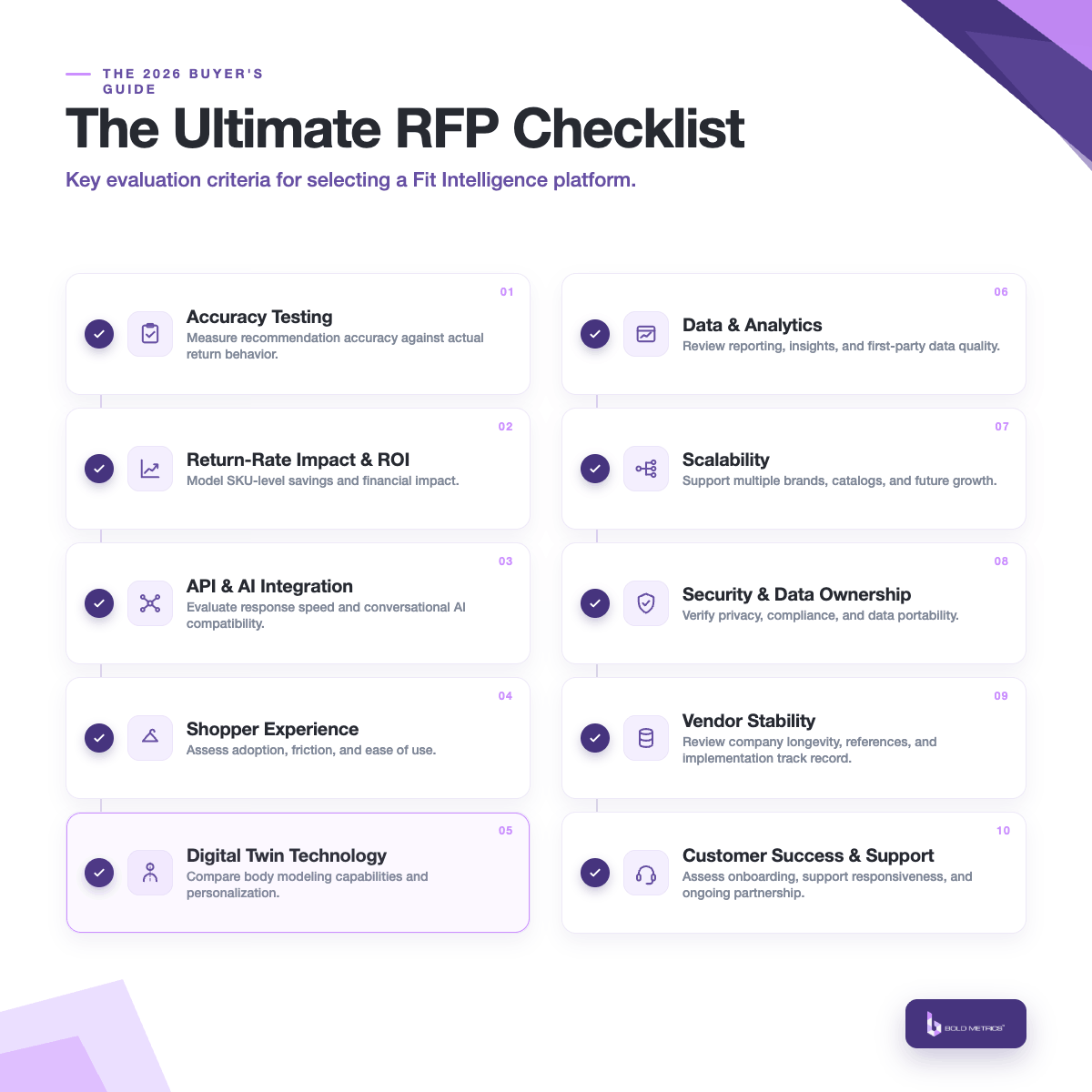
How to Choose a Fit Intelligence Platform in 2026
Published by
Bold Metrics
on
Fit intelligence has become a core pillar of apparel ecommerce operations, and selecting the right platform can determine how well you reduce returns, boost conversions, and deliver accurate sizing experiences. With return rates in fashion ecommerce hovering between 30-40% according to National Retail Federation research, choosing a platform that delivers measurable results is no longer optional.
This guide walks you through a structured evaluation framework for fit intelligence platforms. You'll learn how to test accuracy, model return-rate impact, assess integration requirements for conversational AI shopping assistants, and build a shortlist you can defend to stakeholders. Bold Metrics gives you an AI-powered body data platform that has helped apparel brands reduce fit-related returns by an average of 18% while increasing conversion rates by 4x.
By the end of this guide, you'll have the criteria, methods, and confidence to make a platform decision that directly supports your ecommerce KPIs.
Key Takeaways: How to Choose a Fit Intelligence Platform in 2026
- Accuracy testing requires measuring size selection correctness against actual return behavior, not just self-reported fit satisfaction.
- Return-rate impact modeling connects sizing accuracy to specific SKU-level return reduction, making ROI calculations defensible.
- Integration with conversational AI shopping assistants depends on API response times, data formats, and sizing data connectivity.
- Creating RFP criteria that specify measurable outcomes helps you compare platforms on the metrics that matter to your business.
What Is a Fit Intelligence Platform and Why Does It Matter?
A fit intelligence platform uses AI and machine learning to match individual shopper body data with garment specifications, recommending the size most likely to fit correctly. Unlike static size charts that rely on generic measurements, these platforms create personalized sizing experiences based on each shopper's unique body profile.
The business case is straightforward. According to ACM SIGKDD research, size and fit issues drive a significant portion of fashion ecommerce returns. Each return costs you shipping, restocking, and often a lost customer relationship. Platforms that solve this problem directly affect your bottom line.
For apparel ecommerce leaders and product teams, fit intelligence isn't a nice-to-have feature. It's infrastructure that supports conversion optimization, return reduction, and first-party data capture. The platform you choose will shape how your shoppers interact with sizing for years.
How Do Fit Intelligence Platforms Work?
Fit intelligence platforms operate by combining shopper inputs with product data to generate personalized recommendations. The specific methods vary, but most platforms follow a similar pattern.
Shopper Data Collection Methods
Platforms collect body data through several approaches. Quiz-based systems ask shoppers questions about height, weight, age, and fit preferences. Photo-based systems use computer vision to estimate body measurements from images. Some platforms use purchase history analysis to infer sizing patterns from previous orders.
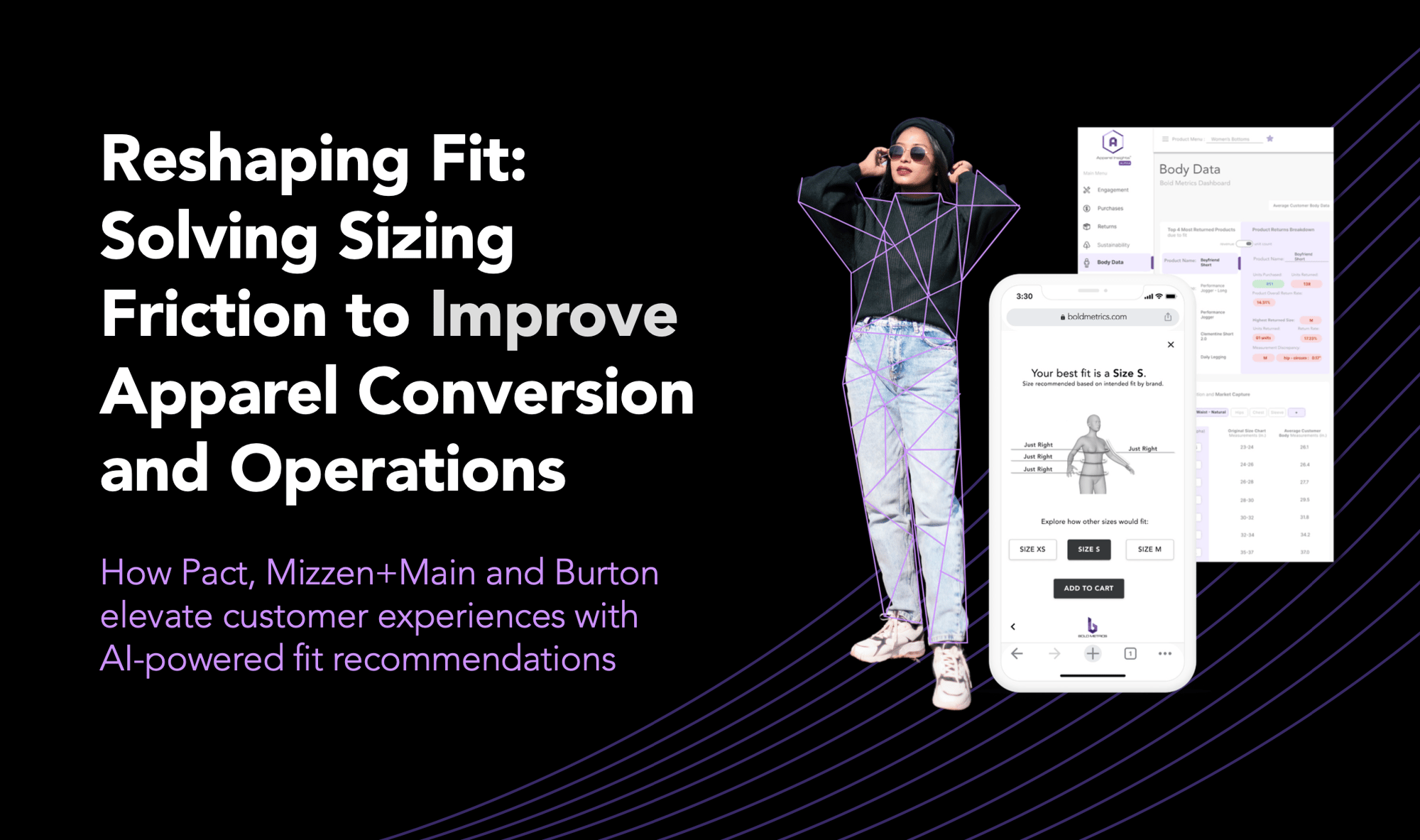
Bold Metrics uses a question-based approach that generates over 50 body measurements from just 4-6 simple inputs. This method delivers highly personalized recommendations without requiring photos or intrusive data collection, which matters if shopper privacy is a priority for your brand.
AI Body Modeling and Digital Twin Technology
The most accurate platforms create digital twins—virtual representations of each shopper's body built from collected measurements. These digital twins are then compared against garment specifications to predict fit outcomes.
This approach works because sizing isn't just about measurements. How a garment drapes, stretches, and conforms to body shape all affect perceived fit. Digital twin technology accounts for these factors by simulating how specific garments will fit each shopper's unique body profile.
Garment Data Integration
Accurate recommendations require detailed product data. Platforms need garment measurements, fabric stretch characteristics, intended fit (slim, relaxed, oversized), and brand-specific sizing conventions. The quality of your garment data directly affects recommendation accuracy.
Why Accuracy Testing Is the Foundation of Platform Evaluation
Accuracy is the metric that makes or breaks a fit intelligence platform. If recommendations are wrong, you'll see returns rise, customer trust erode, and conversion rates stagnate. Testing accuracy before committing to a platform is essential.
What Does Sizing Accuracy Actually Measure?
Sizing accuracy measures how often the platform recommends a size that results in a successful purchase—meaning the shopper keeps the item. This differs from self-reported satisfaction surveys, which can be influenced by factors unrelated to actual fit.
A platform claiming 85% accuracy should mean that 85% of shoppers who follow its recommendations keep their purchases. Ask vendors how they calculate this metric and whether it's validated against return data.
How to Design an Accuracy Pilot Test
Start with a controlled pilot on a subset of your catalog. Select products with varying fit challenges—fitted items, relaxed silhouettes, stretch fabrics, and structured garments. Run the pilot for a minimum of 60 days to capture enough purchase and return data for statistical significance.
Track these metrics during your pilot:
- Recommendation acceptance rate: What percentage of shoppers use the sizing tool?
- Size selection alignment: When shoppers use the tool, do they choose the recommended size?
- Return rate comparison: Compare return rates for orders placed with vs. without platform engagement.
- Reason-code analysis: For returns, what percentage cite fit as the primary reason?
Questions to Ask Vendors About Accuracy
During vendor evaluation, ask these specific questions:
- How do you calculate accuracy, and what data sources validate your claims?
- Can you share case studies with return data from brands similar to mine?
- What accuracy do you guarantee contractually, and what happens if you miss it?
- How does accuracy vary across product categories (e.g., denim vs. knitwear)?
How to Model Return-Rate Impact for ROI Calculations
Reducing returns is where fit intelligence delivers quantifiable ROI. But modeling this impact requires connecting sizing accuracy to financial outcomes in a way that stakeholders can trust.
Understanding the Cost Structure of Returns
Returns carry direct and indirect costs. Direct costs include return shipping, inspection, repackaging, and restocking labor. Indirect costs include lost margin on discounted resale, inventory carrying costs, and environmental impact metrics that affect sustainability reporting.
Most fashion retailers estimate total return processing costs at 20-65% of the original item price. For a $100 garment, each return might cost $20-$65 before you account for the lost sale.
Building a Return-Rate Impact Model
Start with your current baseline. Pull data on:
- Overall return rate by product category
- Fit-related return rate (isolate returns where customers cite size/fit as the reason)
- Average return processing cost per item
- Annual revenue and order volume
Then apply conservative improvement estimates. If a vendor claims 30% reduction in fit-related returns, model scenarios at 15%, 20%, and 30% to show a range of outcomes. This approach builds credibility with finance teams who expect conservative projections.
Sample ROI Calculation Framework
Here's how to structure your calculation:
- Annual orders: 500,000
- Average order value: $120
- Current return rate: 35%
- Fit-related returns (60% of total): 21% of orders
- Return processing cost per item: $25
- Annual fit-related return cost: 500,000 × 21% × $25 = $2,625,000
If a fit intelligence platform reduces fit-related returns by 20%, you save $525,000 annually. Compare this to platform costs to calculate net ROI.
What Are the Integration Requirements for AI Shopping Assistants?
Conversational AI shopping assistants are reshaping how customers interact with ecommerce sites. Your fit intelligence platform needs to integrate with these systems to deliver sizing recommendations where shoppers actually ask for help.
API Response Time Requirements
Conversational interfaces demand fast responses. If a shopper asks your AI assistant "What size should I get?" and waits five seconds for an answer, the experience breaks down. Your fit platform should return recommendations in under 500 milliseconds to support real-time conversations.
Bold Metrics' Virtual Sizer API returns over 50 body measurements in under 500ms, making it well-suited for integration with conversational AI shopping assistants that need instant responses.
Data Format and Schema Compatibility
Integration complexity depends on how well your platform's data formats align with your existing tech stack. Look for platforms that support:
- RESTful APIs with JSON responses
- Webhook support for event-driven architectures
- Pre-built connectors for major ecommerce platforms (Shopify, Magento, Salesforce Commerce Cloud)
- SDK availability for custom implementations
Sizing Data Connectivity Across Channels
Shoppers interact with your brand across web, mobile, and increasingly through voice and chat interfaces. Your fit intelligence platform should maintain consistent sizing data across all these touchpoints.
Ask vendors how they handle:
- Session persistence when shoppers move between devices
- Profile storage for returning customers
- Integration with customer data platforms (CDPs) and CRM systems
- Data portability if you need to switch platforms later
What Evaluation Criteria Separate Fit Intelligence Platforms?
Not all fit intelligence platforms solve the same problems in the same ways. Understanding the different approaches helps you match platform capabilities to your specific needs.
Quiz-Based vs. Photo-Based vs. Purchase History Approaches
Quiz-based platforms ask shoppers questions to build a body profile. This approach respects privacy and works for shoppers uncomfortable with photo capture. The tradeoff is that accuracy depends on shoppers providing honest, accurate inputs.
Photo-based platforms use computer vision to estimate body measurements from photos. This can increase accuracy for some use cases, but introduces privacy concerns and friction that reduces adoption rates.
Purchase history platforms analyze what sizes shoppers have bought and kept across brands. This works well for returning customers but provides no guidance for new shoppers or categories they haven't purchased before.
How Fabric and Fit Preferences Affect Recommendations
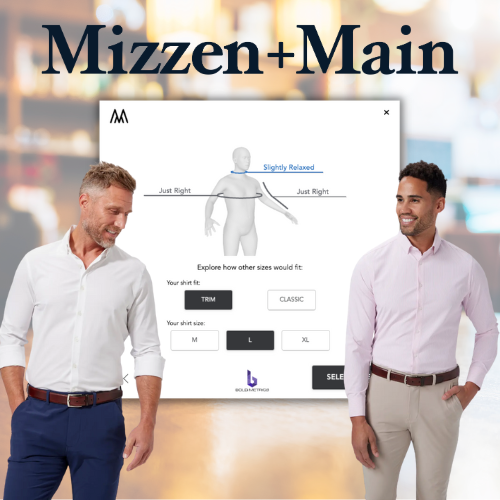
Sophisticated platforms account for fabric stretch, garment construction, and individual fit preferences. A shopper who prefers relaxed-fit tops shouldn't receive the same recommendation as someone who likes fitted silhouettes, even if their body measurements are identical.
Look for platforms that:
- Incorporate fabric stretch data into recommendations
- Allow shoppers to indicate fit preferences (tight, regular, loose)
- Adjust recommendations based on garment category and intended use
Scalability and Multi-Brand Support
If you operate multiple brands or plan to expand your catalog significantly, evaluate how platforms handle scale. Questions to consider:
- How does pricing scale with order volume or product count?
- Can you maintain separate brand configurations under one account?
- How quickly can you onboard new products or categories?
Step-by-Step Guide: How to Evaluate a Fit Intelligence Platform
Follow this structured process to move from initial research to final selection.
Step 1: Define Your Requirements and Success Metrics
Before talking to vendors, document what success looks like for your business. Specify:
- Target return-rate reduction (e.g., "reduce fit-related returns from 20% to 14%")
- Conversion rate improvement goals
- Integration requirements with existing systems
- Budget constraints and timeline
Step 2: Create Your Initial Shortlist
Research platforms that serve brands similar to yours in size and category. Review case studies, check for industry recognition, and note any red flags in customer reviews. Your initial shortlist should include 3-5 platforms.
Step 3: Request Detailed Demonstrations
During vendor demos, focus on:
- The shopper experience on product detail pages
- Admin interface for managing products and viewing analytics
- Integration documentation and technical support resources
- Reporting capabilities and data export options
Step 4: Conduct Reference Checks
Ask vendors for references from brands in your category. During reference calls, ask:
- What return-rate improvements did you actually see?
- How long did implementation take, and what surprised you?
- How responsive is the vendor when issues arise?
- Would you choose this platform again?
Step 5: Run a Pilot Program
Before signing a long-term contract, negotiate a pilot period. Test the platform on a representative subset of your catalog and measure actual performance against your success metrics.
Step 6: Negotiate Contract Terms
Include performance guarantees, data ownership clauses, and exit provisions in your contract. Ensure you can access your data if you decide to switch platforms.
How Bold Metrics Addresses Fit Intelligence Challenges
Bold Metrics has built its platform specifically to address the core challenges apparel ecommerce brands face with sizing. The company's approach centers on AI-powered digital twin technology that creates personalized body profiles from minimal shopper inputs.
Accuracy Without Intrusive Data Collection
Bold Metrics generates over 50 body measurements from just 4-6 simple questions—height, weight, age, and a few preference inputs.
For brands concerned about shopper privacy or adoption rates, this matters. A simpler input process means more shoppers actually use the tool, which directly affects how much return reduction you can achieve.
Proven Results Across Categories
Bold Metrics reports average client results including:
- 4x increase in conversion rates for shoppers who engage with sizing tools
- 22% increase in average order value
- 18% reduction in fit-related returns
The platform has powered over 250 million digital twins with 12 billion body data points, giving its AI models a robust foundation for accurate recommendations.
Flexible Integration Options
Bold Metrics offers multiple integration paths. The Smart Size Chart installs with a simple code snippet for brands wanting quick deployment. The Virtual Sizer API supports custom implementations for brands needing white-labeled experiences or integration with conversational AI shopping assistants.
What Data Should You Capture from Your Fit Intelligence Platform?
Beyond sizing recommendations, fit intelligence platforms generate valuable first-party data that can inform decisions across your organization.
Customer Body Data for Product Development
Aggregate body data from your shoppers can reveal insights for technical design teams. If your average customer has specific body proportions that differ from your size chart assumptions, your grading may need adjustment.
Bold Metrics' Apparel Insights product helps brands analyze their actual customer body data to validate sizing decisions and identify opportunities to improve fit across their assortment.
Fit Preference Data for Merchandising
Understanding whether your customers prefer relaxed or fitted silhouettes can inform buying decisions and marketing positioning. Track preference patterns by category and customer segment.
Size Demand Forecasting for Inventory Planning
When you know what sizes your shoppers need before they order, you can allocate inventory more effectively. This data becomes especially valuable during pre-season planning and for limited-edition drops.
How to Create RFP Criteria for Fit Intelligence Platforms
A well-structured RFP helps you compare vendors objectively and ensures you gather the information you need for a confident decision.
Required Information to Request
Your RFP should ask vendors to address:
- Company background, funding status, and customer count
- Technical architecture and security certifications
- Accuracy methodology and validation data
- Case studies with measurable outcomes
- Pricing model and contract terms
- Implementation timeline and support structure
- Integration documentation and API specifications
Scoring Criteria Template
Weight your evaluation criteria based on your priorities. A sample weighting:
- Accuracy and return-rate reduction evidence: 30%
- Integration capabilities: 20%
- Shopper experience quality: 15%
- Vendor stability and support: 15%
- Pricing and total cost of ownership: 10%
- Data and analytics capabilities: 10%
Red Flags to Watch For
Be cautious of vendors who:
- Cannot share return-rate reduction data from actual implementations
- Require long-term commitments without pilot options
- Lack clear data ownership and portability terms
- Have limited technical documentation or integration support
What Trends Are Shaping Fit Intelligence in 2026?
The fit intelligence space continues to evolve. Understanding current trends helps you choose a platform positioned for long-term relevance.
Integration with Agentic Commerce
AI shopping agents are becoming more sophisticated. Platforms that can feed sizing intelligence into autonomous shopping workflows will have advantages as this technology matures.
Sustainability Metrics and Reporting
Return reduction directly affects environmental impact. Expect platforms to offer more robust sustainability reporting that quantifies carbon savings from avoided returns and reduced shipping.
Cross-Channel Consistency
As brands expand into marketplaces, social commerce, and conversational interfaces, maintaining consistent sizing experiences across channels becomes critical. Platforms with strong API-first architectures will handle this evolution better.
In Conclusion: How to Select the Right Fit Intelligence Platform
Choosing a fit intelligence platform requires balancing accuracy, integration capabilities, cost, and vendor stability. Start by defining what success looks like for your business in measurable terms. Build a shortlist based on category fit and proven results. Test before committing through structured pilots.
The platform you select will directly affect return rates, conversion metrics, and customer satisfaction for years. Take the time to evaluate thoroughly, ask hard questions, and negotiate contract terms that protect your interests.
If you're ready to explore how fit intelligence can support your goals, start with a clear evaluation framework and prioritize vendors who can demonstrate real results.
FAQs about How to Choose a Fit Intelligence Platform in 2026
What is a fit intelligence platform?
A fit intelligence platform uses AI to match shopper body data with garment specifications, recommending sizes most likely to result in successful purchases. These platforms replace static size charts with personalized recommendations that reduce returns and increase conversion.
Bold Metrics operates as a fit intelligence platform that creates digital twins from simple shopper inputs, generating over 50 body measurements to power accurate sizing recommendations.
How much can fit intelligence reduce return rates?
Results vary by brand and implementation quality, but well-deployed platforms typically reduce fit-related returns by 15-30%. Bold Metrics clients report an average 18% reduction in fit-related returns, with some brands achieving reductions exceeding 30%.
The key is that reductions apply specifically to fit-related returns. Other return reasons (quality issues, changed minds) require different solutions.
How long does implementation typically take?
Implementation timelines range from a few days to several months depending on complexity. Basic widget installations can go live in days. Custom API integrations with legacy systems may take 8-12 weeks.
Bold Metrics offers both a simple code snippet installation for the Smart Size Chart and flexible API options for brands needing custom implementations.
What data do I need to prepare before implementation?
You'll need detailed garment measurement data for each SKU, including key dimensions and fabric stretch characteristics. Some platforms also benefit from historical return data to calibrate their models.
Plan to involve your technical design team in data preparation. The accuracy of recommendations depends heavily on the quality of your product data.
Can fit intelligence integrate with conversational AI shopping assistants?
Yes, modern fit platforms offer APIs designed for integration with AI shopping assistants. Bold Metrics' Virtual Sizer API returns sizing recommendations in under 500ms, making it fast enough for real-time conversational interfaces.
When evaluating platforms, ask specifically about API documentation, response time guarantees, and examples of conversational commerce integrations.
What ROI should I expect from fit intelligence?
ROI depends on your current return rates, average order values, and implementation quality. Brands with high fit-related return rates see faster payback. A typical calculation: if you process 100,000 orders annually with 20% fit-related returns and $30 return processing costs, even a 15% reduction in fit-related returns saves $90,000 yearly.
Bold Metrics helps brands build ROI models based on their specific metrics and goals, making it easier to justify investment to stakeholders.