
.png?width=600&height=408&name=march%202023%20-%20french%20toast%20(1).png)
.png?width=1080&height=1080&name=Bold%20Metrics%E2%80%99%20digital%20twin%20technology%20helps%20some%20of%20the%20worlds%20biggest%20bands%20increase%20conversion%20and%20AOV%2c%20reduce%20returns%2c%20optimize%20their%20customer%20experience%2c%20and%20boost%20brand%20loyalty.%20(2).png)


Fit Is Infrastructure: What Apparel Brands Should Know Before Investing in Sizing Technology
Published by
Bold Metrics
on
Size and fit issues account for as much as 67% of fashion returns. Online apparel return rates run between 20% and 30%, with some categories reaching 50%. And bracketing, the practice of ordering multiple sizes with the intent to return most of them, is now standard behavior for 51% of Gen Z shoppers.
These numbers have been climbing for years, but 2026 is the year they stopped being tolerable. McKinsey's State of Fashion report projects another year of low single-digit industry growth, and nearly half of fashion executives expect conditions to worsen. When acquisition costs are rising and margins are under pressure, every avoidable return is margin you handed back, and every hesitant shopper is a conversion you paid for and lost.
The common thread running through returns, conversion, and loyalty is the same question shoppers have been asking since the first online apparel order: will it fit me?
Why size charts stopped being enough
Traditional size charts rest on two assumptions that don't survive contact with reality. First, that a given size represents consistent proportions across all body types. Second, that shoppers know their own measurements. Neither is true, and both problems compound as brands expand into new regions, categories, and customer segments, each with different sizing expectations.
The result is a confidence gap at the exact moment of purchase. When shoppers hesitate online, it's rarely about price or product quality. It's uncertainty about whether the garment will work for their body. That hesitation shows up as cart abandonment, bracketing, and returns. Over time, it shows up as eroded trust. Shoppers remember fit failures, and each one raises the perceived risk of the next purchase.
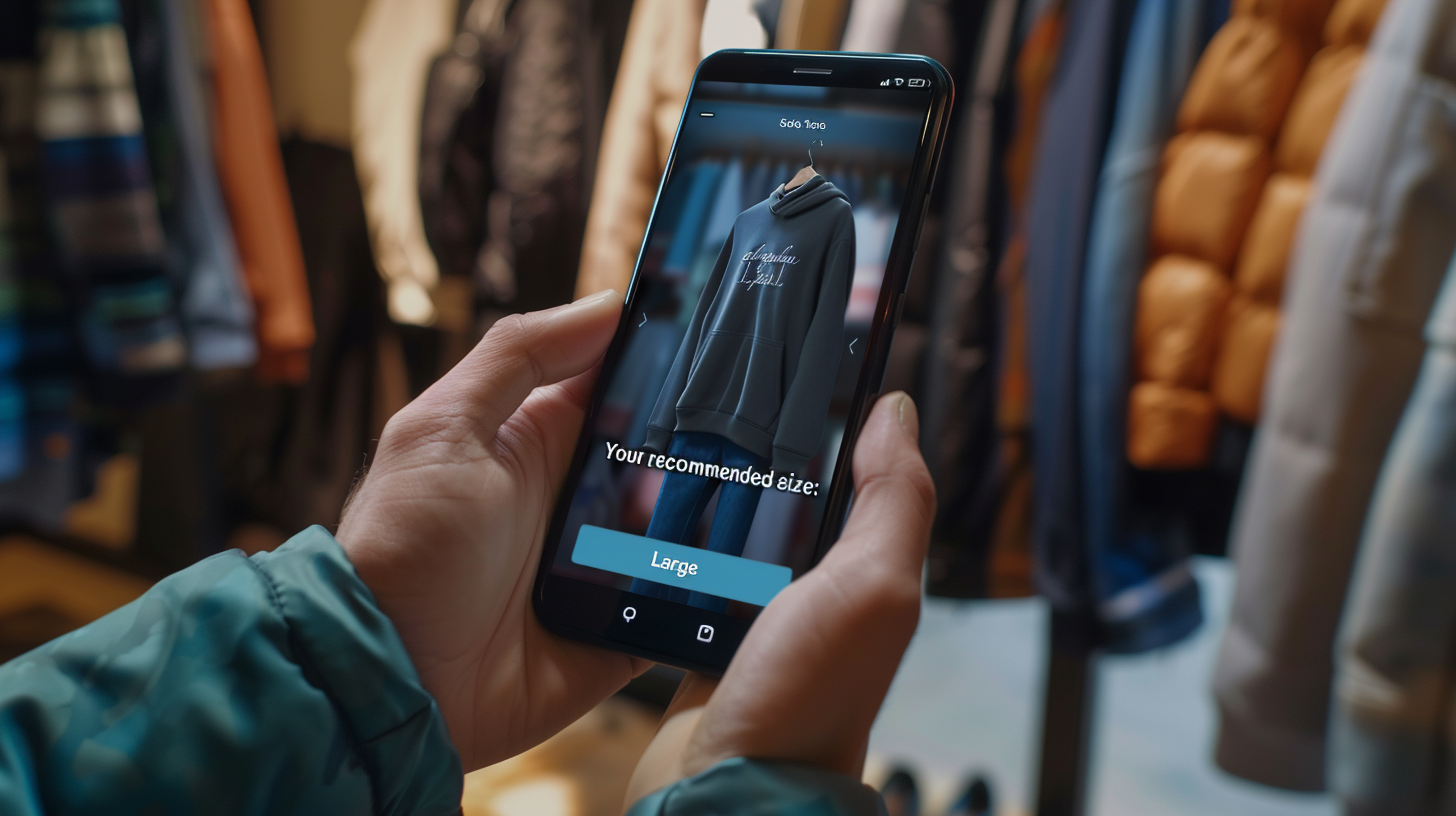
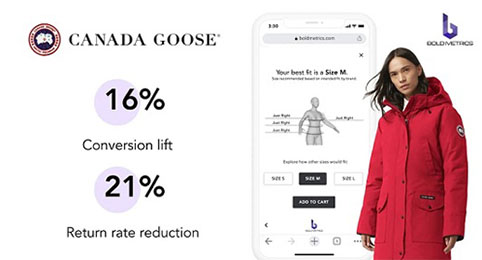
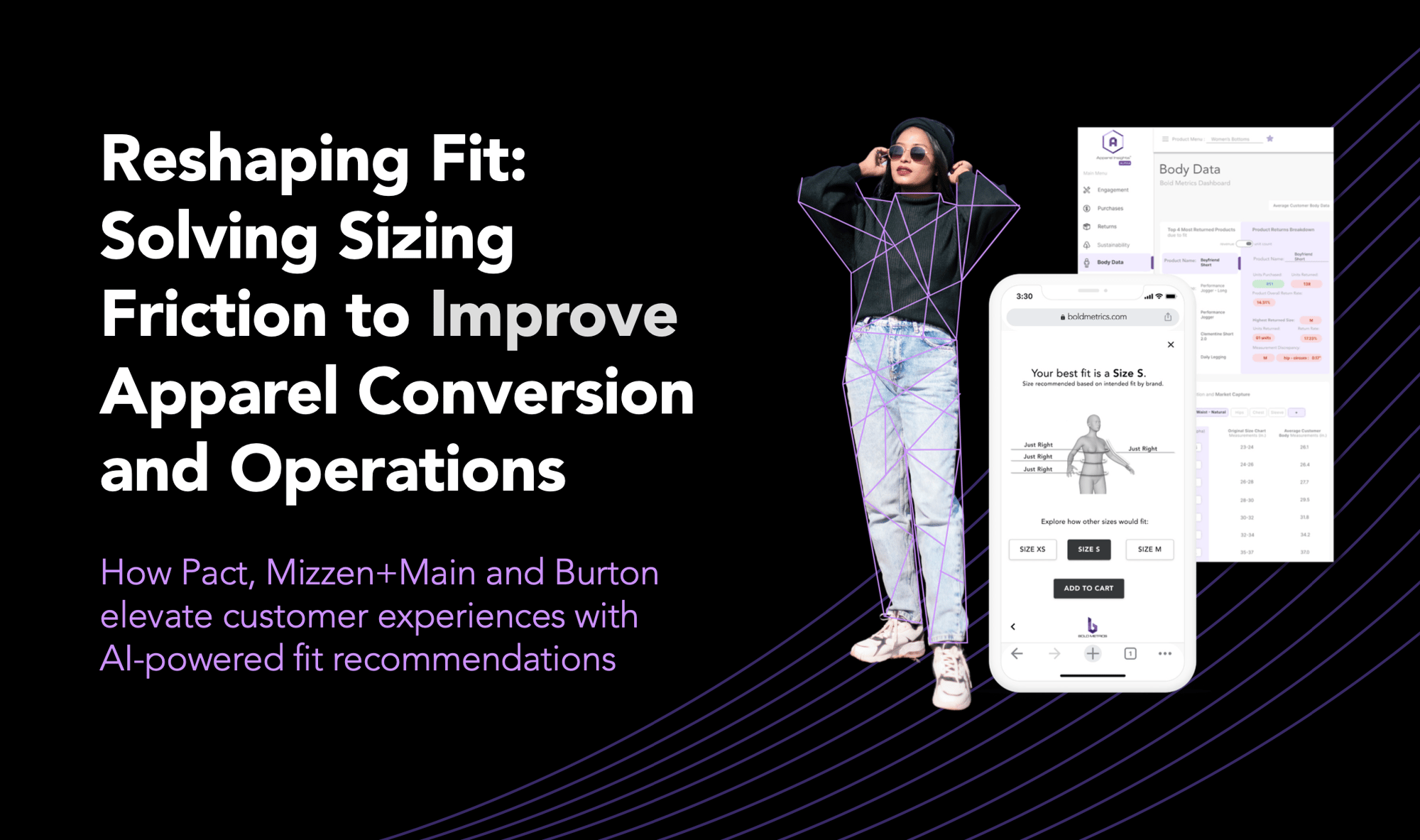
Fit intelligence emerged to close this gap. Instead of pointing shoppers to a static chart, these platforms collect a small number of inputs, model the shopper's body, and map that model against the actual construction data of a specific garment. The output is a personalized recommendation: not "you're a medium," but "this shirt in medium fits true at the chest and slightly long in the sleeve."
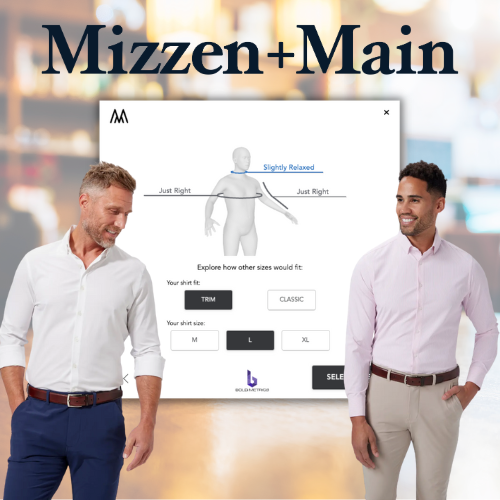
Two things make this approach fundamentally different from a size chart. It's built on real body data and real garment specs rather than industry averages. And it can account for preference, because two shoppers with identical measurements may want entirely different fits, one trim and athletic, the other relaxed.
The new pressure: AI shopping agents
There's a second force making fit data urgent, and it has nothing to do with return rates.
AI shopping agents already field roughly 50 million shopping queries a day, and apparel is one of the hardest categories for them to get right. Not because the models are unsophisticated. Because the data they can access is broken.
An agent can easily interpret "a dress for a fall wedding in Paris." What it can't do is answer the follow-up: will it fit me? That requires a structured, machine-readable mapping between a specific human body and a specific garment, and most product catalogs were never built to provide one. Sizing data, where it exists, is a PDF table or an image formatted for humans to read, not for machines to reason about.
To make a confident fit recommendation, an agent needs four things working together: garment measurement data at the SKU level, a persistent structured profile of the shopper's body, a recommendation layer that returns fit context rather than just a size label, and real-time inventory awareness. Most brands can deliver none of these today.
The stakes are asymmetric. A shopper who gets a wrong-size recommendation from an AI agent won't blame the garment. They'll stop trusting the agent, and by extension, the brands surfaced through it. With McKinsey estimating that agentic commerce could orchestrate up to $1 trillion in U.S. B2C retail revenue by 2030, brands whose sizing data is structured and accessible will capture that traffic as it scales. Brands whose data isn't will be invisible to it, or worse, present but unreliable.
How to evaluate fit technology like an operator
For brands considering fit intelligence, the evaluation process matters as much as the vendor. A few principles separate rigorous evaluations from hopeful ones.
Define accuracy against return behavior, not satisfaction surveys. A platform claiming 85% accuracy should mean that 85% of shoppers who follow its recommendations keep their purchases. Ask vendors how they calculate accuracy and whether it's validated against actual return data. If they can't answer, that's your answer.
Model ROI conservatively. Start with your baseline: overall return rate, the portion attributable to fit, and your true cost per return, which most retailers estimate at 20% to 65% of item price once shipping, inspection, restocking, and discounted resale are counted. If a vendor claims a 30% reduction in fit-related returns, model outcomes at 15%, 20%, and 30%. Finance teams trust ranges, not best cases.
Pilot before committing. Run a 60-day test on a representative slice of your catalog, including fitted items, relaxed silhouettes, and stretch fabrics. Track tool adoption, whether shoppers follow the recommendation, and return rates for engaged versus non-engaged orders.
Evaluate for where commerce is going, not just where it is. API response times matter when recommendations need to power conversational interfaces in real time. Ask about structured outputs, cross-channel profile persistence, data ownership, and portability if you switch platforms later. A tool built only for the product detail page solves last year's problem.
The compounding value of fit data
The most overlooked benefit of fit intelligence sits upstream of the shopper experience entirely. Aggregated body data reveals which body segments a brand's current size range underserves, where grading assumptions diverge from actual customers, and where a new fit block could unlock an entire segment. That intelligence feeds design, merchandising, and inventory planning, turning a conversion tool into a product development asset.
That's the real shift happening in 2026. Fit is moving from a surface-level ecommerce feature to core infrastructure: a shared source of truth connecting ecommerce, product, and operations. The brands treating it that way are seeing the compounding results, in conversion, in retention, and in readiness for a commerce landscape where an AI agent may be the first to ask, on a shopper's behalf, whether the garment will fit.
When fit works, ecommerce works. Increasingly, everything else is built on top of it.
%20(5)-1-1.jpg)